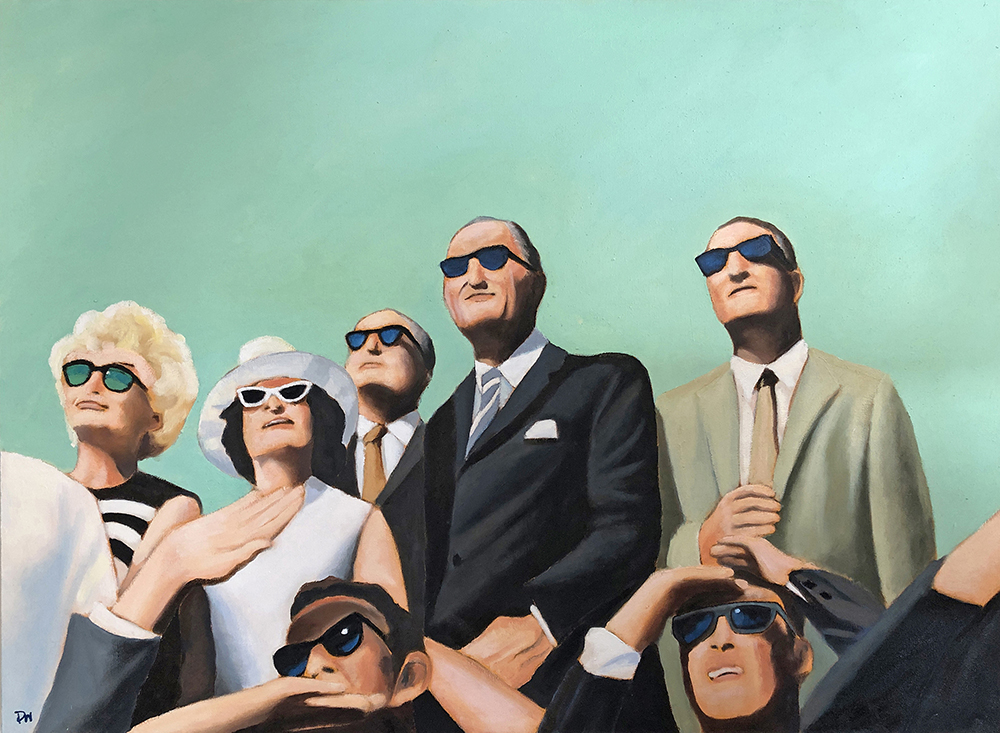
Observers at the Kennedy Space Centre launch of Apollo II which carried three astronauts to the moon in 1969
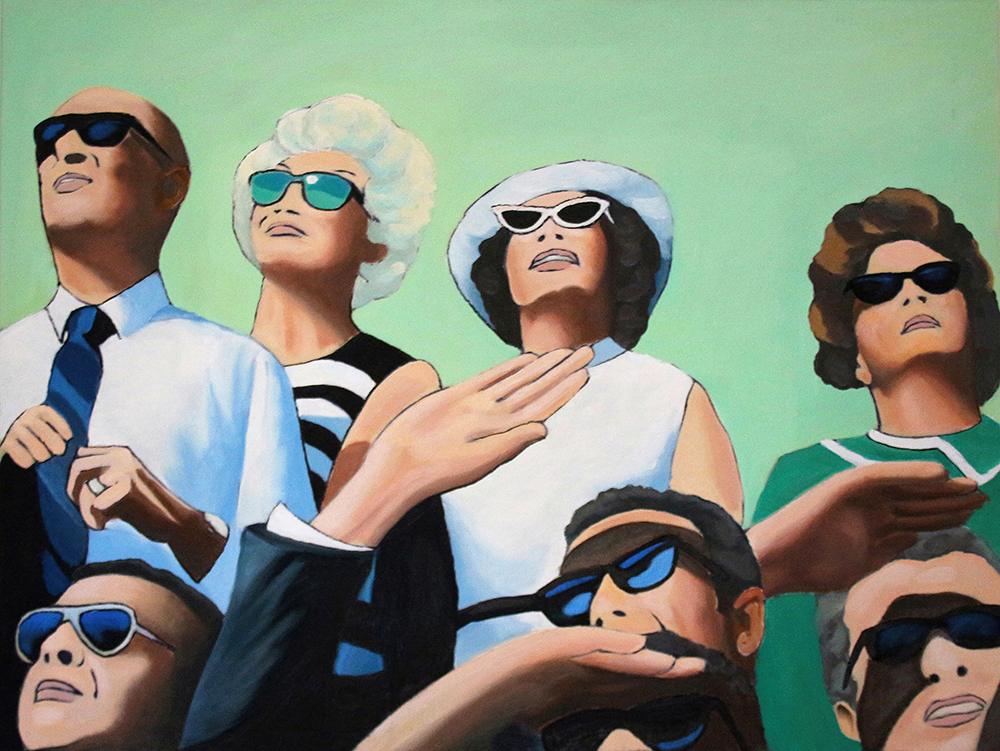
Created 2020
(61cm x 81cm x 2cm)
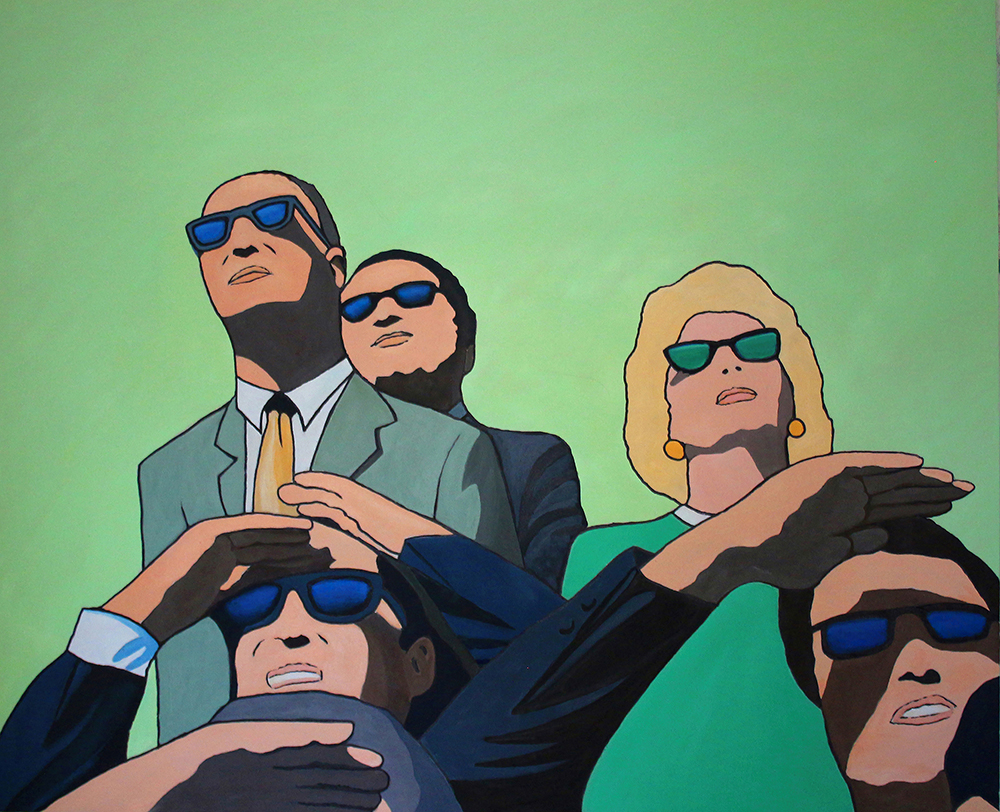
Created 2020
(86cm x 107cm x 2cm)
This graphic, pop-art series of paintings was started around the 50th anniversary of the first moon landing in 1969. This series of paintings which shift between stylised flat colours and semi-realism is inspired by photographs taken of the dignitaries watching the launch.
The event itself is not shown, but instead, the immediate witnesses, gazing upward – people dressed in their best, in the styles of the day. They arrived ready for the moment and were the real holders of the truth.
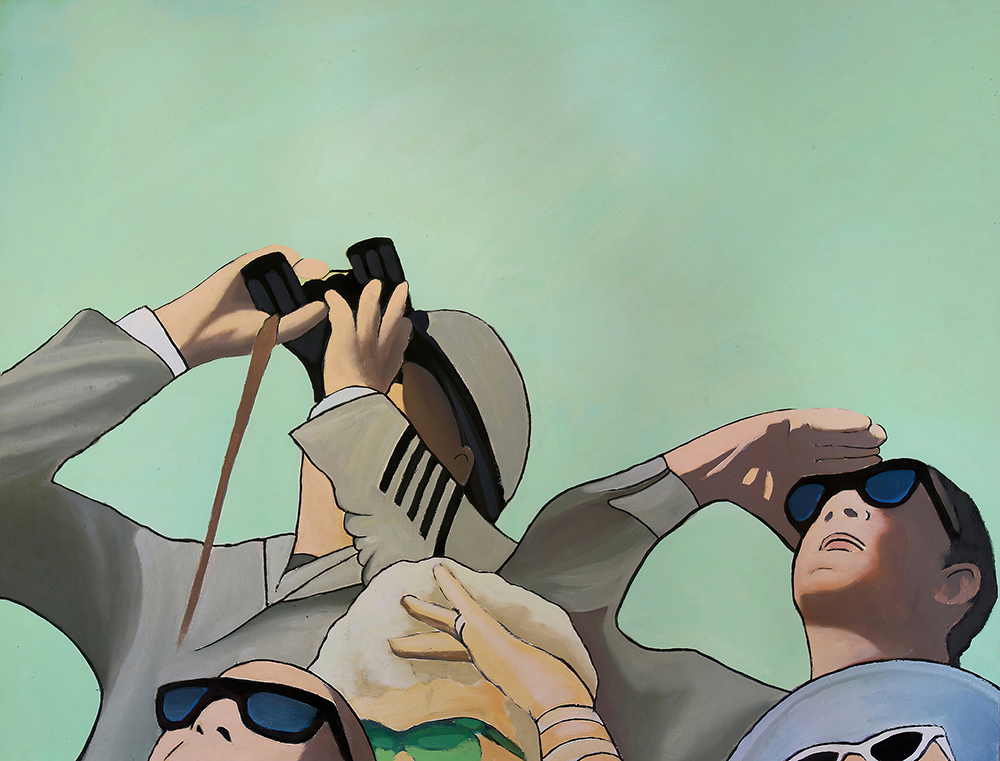
Created 2020
(62cm x 81cm x 2cm
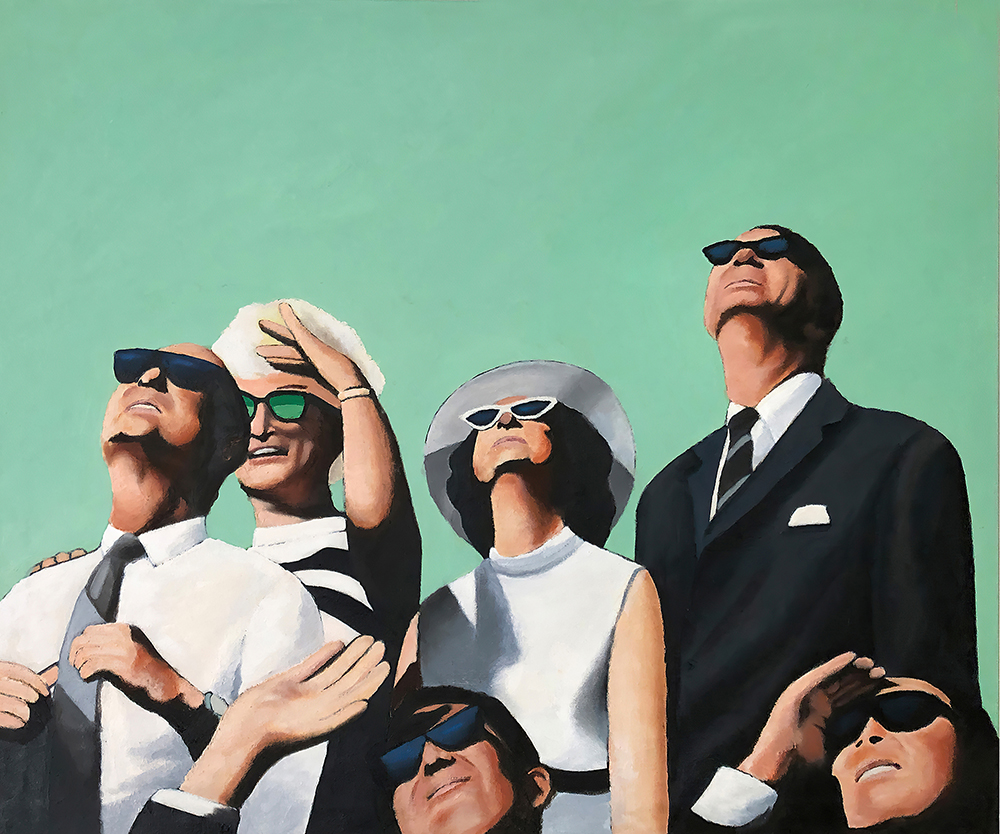
Created 2023
(80cm x 97cm x 2cm)
Created 2020
(76cm x 109cm x 2cm)
All original paintings are oil on canvas and unframed – prints on canvas are available.
More about the Apollo 11 mission
The primary objective of Apollo 11 was to complete a national goal set by President John F. Kennedy on May 25, 1961, which was to perform a crewed lunar landing and return to Earth.
The giant Saturn V AS-506 rocket launched Apollo 11 from Cape Kennedy on July 16, 1969, carrying Commander Neil Armstrong, Command Module Pilot Michael Collins and Lunar Module Pilot Edwin “Buzz” Aldrin into an initial Earth orbit.
An estimated one million spectators watched from the highways and beaches in the vicinity of the launch site. Dignitaries included former president Lyndon B. Johnson with his wife and Vice President Spiro Agnew, the Chief of Staff of the United States Army, four cabinet members, 19 state governors, 40 mayors, 60 ambassadors and 200 congressmen. President Richard Nixon watched the launch from his office in the White House with his NASA liaison officer, Apollo astronaut Frank Borman.
The launch was televised live in 33 countries, with an estimated 25 million viewers in the United States alone. Millions more around the world listened to radio broadcasts.
On July 20th 1969, an estimated 650 million people watched on TV. After a three-day journey, the astronauts dealt with unexpected computer alarms and had to manually steer The Eagle over rocky craters to find a safe touchdown spot.
About six hours after landing, Neil Armstrong stepped onto the lunar surface and declared: “That’s one small step for [a] man, one giant leap for mankind.” Aldrin joined him roughly 20 minutes later.
The astronauts spent about 2.5 hours outside collecting 21.5 kg of lunar samples, deploying scientific instruments, and planting an American flag.
The crew safely launched from the Moon, docked with the Command Module Columbia, and splashed down in the Pacific Ocean on July 24 1969
To pull off this historic feat, more than 400,000 engineers and scientists across the country contributed to the Apollo program. They relied heavily on the “free return trajectory” for the transit—a mathematical safeguard that used the Moon’s gravity to sling the spacecraft safely back to Earth if the main engines failed.
You can explore more about this landmark achievement by checking out official resources from the NASA Apollo 11 Mission Overview or the Smithsonian National Air and Space Museum.